
Health Literacy Month: 5 Questions to Ask Your Doctor
Understanding Your Care Is Part of Getting Well
A patient leaves an appointment with a new prescription, instructions for a follow-up test, and a plan to manage a health condition. But once home, questions begin to surface.
Should the medicine be taken with a meal? What is the test checking for? Which step comes first?
Situations like these show why understanding health information is such an important part of receiving care.
October is Health Literacy Month, an opportunity to explore how clear communication helps people participate in their healthcare—and how patients, providers, volunteers, and supporters can help make that possible.
What Is Health Literacy?
Health literacy is the ability to find, understand, and use information and services to make decisions about health.
It shows up in everyday tasks: reading a prescription label, preparing for an appointment, understanding a test result, or knowing when and where to seek care.
Health literacy also involves the organizations providing that information. Healthcare providers have a responsibility to explain information clearly and make services easier to navigate.
Patients Should Feel Comfortable Asking Questions
Patients do not need to know medical terminology before an appointment. Questions are a valuable part of the conversation.
A few useful starting points include:
What does this mean for my health?
What should I do next?
How and when should I take this medicine?
Can you explain that in a different way?
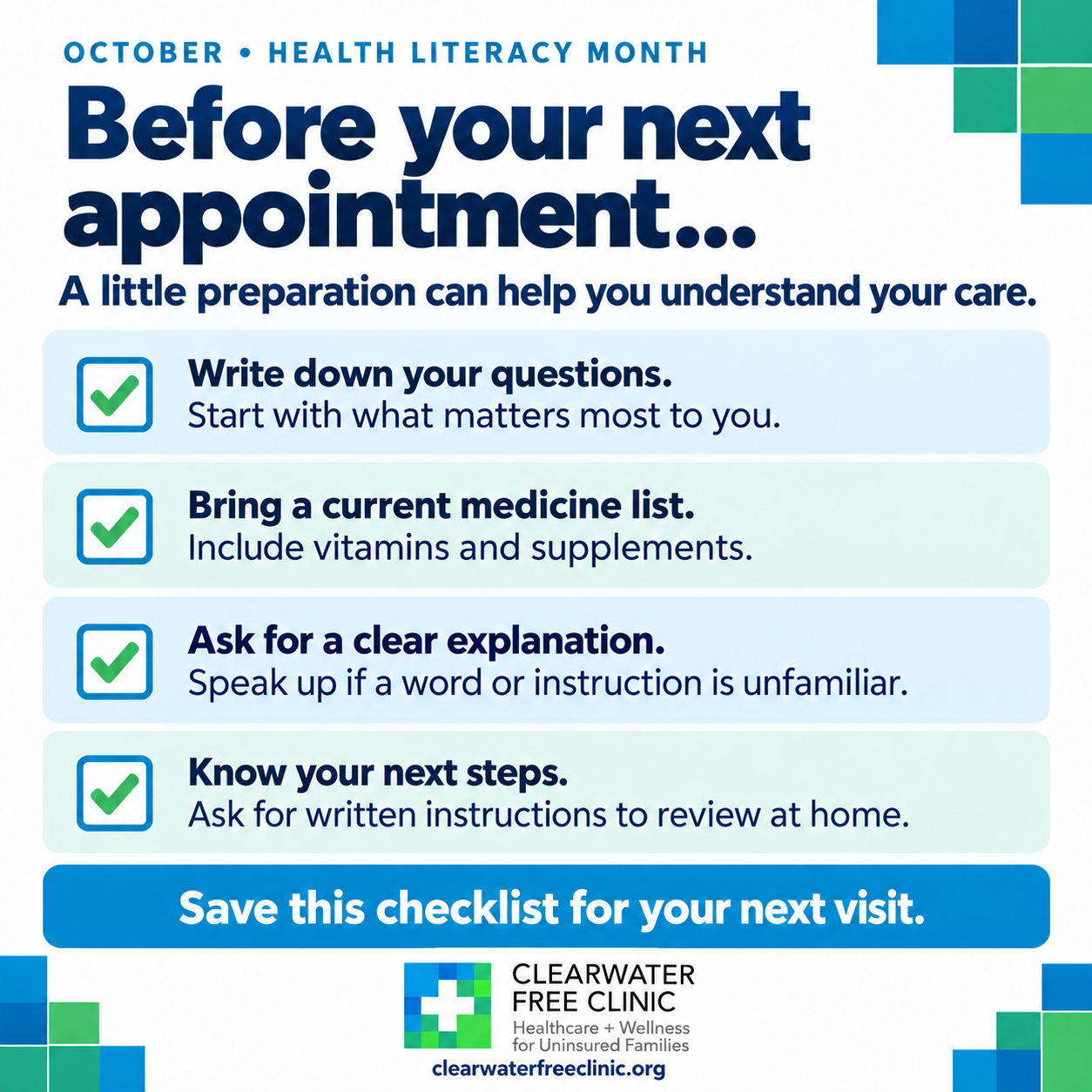
Can you write down the instructions so I can review them later?
Writing down questions before a visit can help patients remember what they want to discuss. Bringing a current list of medicines and taking notes can also help make the conversation more useful.
A Role for the Whole Clinic Community
Patients, staff, volunteers, and donors each contribute to an environment where understanding matters.
Patients bring their questions, priorities, and experiences. Staff and clinical volunteers help explain information and discuss next steps. Nonclinical volunteers can help create a welcoming experience and connect questions with the appropriate team member. Donors help sustain access to care and the resources that support it.
Together, these contributions help make healthcare more approachable and easier to navigate.
This Health Literacy Month, Clearwater Free Clinic invites its community to recognize the importance of clear information and open conversation. When people understand their care, they are better equipped to take an active role in their health.